Executable Documentation: Proving Setup Instructions Still Work in 2026
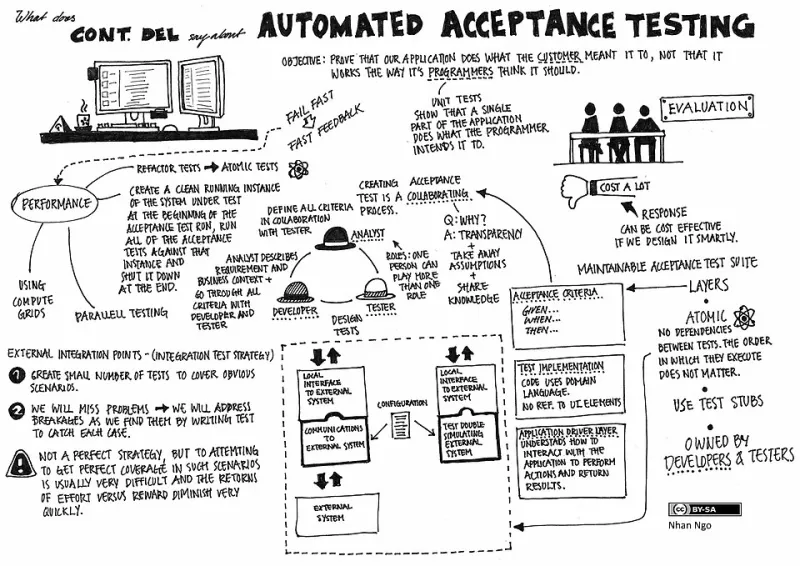
Photo: Nhan Ngo, CC BY-SA 4.0, via Wikimedia Commons
A setup guide is part of a project's public interface. When a developer downloads a tool or clones a repository, the README is often the first operational contract they encounter. If the installation steps fail, the software's quality becomes secondary. In 2026, documentation that cannot be verified is a liability, not an asset.
The practical response is to make the setup guide executable. Instead of treating installation instructions as prose that someone occasionally edits, teams can convert the critical path into a smoke test that runs on a clean machine or CI runner. The goal is not to test every feature. The goal is to prove that a new user can get from download to a working baseline using only the published instructions.
Why Setup Instructions Drift
Documentation tends to decay quietly. A package manager changes a default, a runtime reaches end of life, an environment variable becomes mandatory, or a certificate authority rotates. The README may still look correct because no one has tried it from scratch.
A developer machine is a poor verification environment. It contains cached downloads, global packages, shell profiles, and credentials that mask missing steps. The instructions appear to work because the machine is already prepared. A clean environment exposes the truth.
Treating the setup section as a contract changes how teams maintain it. The README describes a sequence that must succeed. The smoke test enforces that sequence. When one changes, the other must change with it.
Define the Smallest Reliable Contract
A useful smoke test covers the minimum path a new user must complete: obtain the project, install the required runtime, install dependencies, configure required environment variables, and run a simple health check. This is not an exhaustive tutorial. It is a verification of the assumptions that make the rest of the documentation possible.
For many projects, the contract can be expressed as a short script. On Unix-like systems, a Bash script with strict error handling is sufficient. On Windows, a PowerShell script serves the same purpose. The README should reference the script rather than duplicating every command, so there is one authoritative path.
The script should fail fast, print clear step labels, and avoid interactive prompts. It should read version numbers from a single file or environment block so updates do not require scattered edits. It should never contain real secrets; a committed example file can show the required variable names without exposing credentials.
Run It Where the User Runs It
The most reliable smoke test runs in a disposable environment. Containers are a practical choice for Linux baselines because they start clean and can be rebuilt quickly. For cross-platform projects, a CI matrix is often more appropriate. GitHub Actions and GitLab CI can run the same script on Linux, Windows, and macOS runners, which catches path assumptions and shell differences early.
A scheduled job is valuable even when documentation has not changed. Dependencies move, registries change, and base images receive updates. A weekly run provides an early warning before a new user encounters a broken guide. Running the job on pull requests that touch the README or setup scripts closes the loop between documentation edits and verification.
Local execution still matters. Tools such as act can approximate GitHub Actions workflows, and a small virtual machine or container can provide a clean local check. The key principle is that the test must not depend on the developer's accumulated state.
Tool Choices That Stay Lightweight
The tooling should be boring and maintainable. A shell script plus a CI job is often enough. Task runners such as Make or just can provide consistent entry points without adding a large dependency. For assertions beyond command success, small test frameworks can help. Bats is useful for Bash checks, Pester covers PowerShell, and pytest can validate Python-based setup paths.
Avoid building a custom documentation platform. The smoke test should be easy for a contributor to read and run. If the verification process becomes more complex than the setup guide itself, it will be skipped.
Common Failure Points
Several problems appear repeatedly in automated setup checks. Stale package versions are among the most common. Instructions that tell users to install the latest version may work today and fail next month. Pinning versions in the smoke test, while documenting an upgrade policy, makes failures visible and intentional.
Missing environment variables are another frequent cause. A guide may mention a configuration file in one section and assume its existence in another. The smoke test should verify that required variables are present and that the application reports a clear error when they are not.
Operating system assumptions also cause trouble. Path separators, line endings, shell built-ins, and permission models differ across platforms. A Windows runner and a Linux runner catch different classes of defects. Interactive installers are another hazard; they cannot complete unattended and should be replaced with documented non-interactive flags.
Finally, documentation and scripts diverge. A contributor may update the script but forget the README, or the reverse. Keeping the README short and linking to the script reduces duplication. A review checklist that requires both files to change together prevents silent drift.
A Lightweight Maintenance Routine
A sustainable routine does not require a large process. Assign an owner for setup documentation. Run the smoke test on documentation changes and on a weekly schedule. Review failures as documentation bugs, not as infrastructure noise. Record the last verified date in the README so readers know when the instructions were last proven.
When a failure occurs, fix the guide first and the script second. The script exists to protect the user's path, not to hide it. If a step is no longer necessary, remove it from both places. If a new prerequisite appears, document it and assert it in the test.
Conclusion
Executable documentation turns a hopeful README into a verified onboarding path. For developers and IT users who depend on downloads and setup guides, that distinction matters. A smoke test is a modest investment, but it produces a clear return: instructions that can be trusted because they have been run, not merely written.